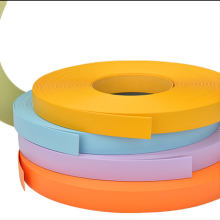
ABS is synthesized from three chemical monomers, acrylonitrile, butadiene and styrene. Each monomer has different properties: Acrylonitrile has high strength, thermal stability and chemical stability; Butadiene has toughness and impact resistance; Styrene has easy processing, high finish and high strength. From a morphological point of view, ABS is an amorphous material. Polymerization of the three monomers resulted in a terpolymer with two phases, a continuous styrene-acrylonitrile phase and a polybutadiene rubber dispersed phase. The properties of ABS mainly depend on the ratio of the three monomers and the molecular structure in the two phases. This allows great flexibility in product design, and has resulted in hundreds of different qualities of ABS on the market. These different quality materials offer different properties such as medium to high impact resistance, low to high finish and high temperature twist properties. ABS material has superior processability, appearance characteristics, low creep and excellent dimensional stability and high impact strength. Relatively speaking, ABS edge strips have higher strength, stronger impact resistance, higher finish and higher stability.