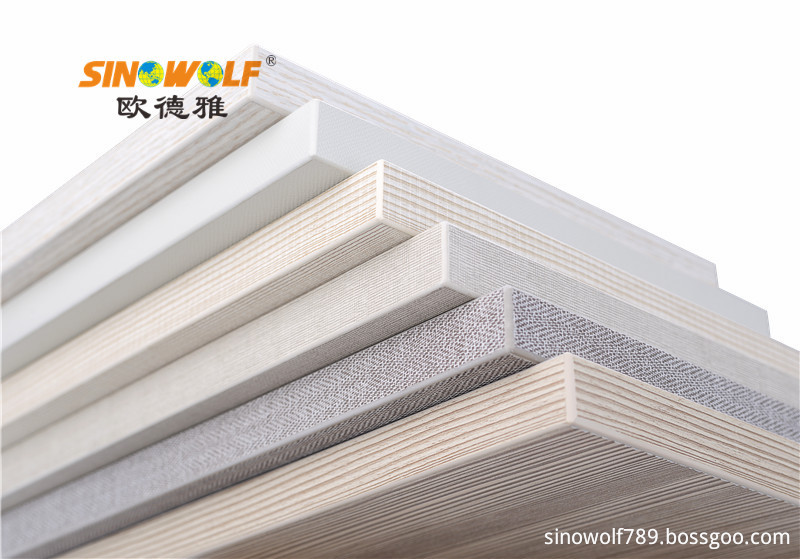
ABS and PVC are two common materials used for edge banding, which is the process of covering the exposed edges of a material, typically in furniture and cabinetry, to provide a finished look and protect against wear and tear. Here are the differences between ABS and PVC edge banding:
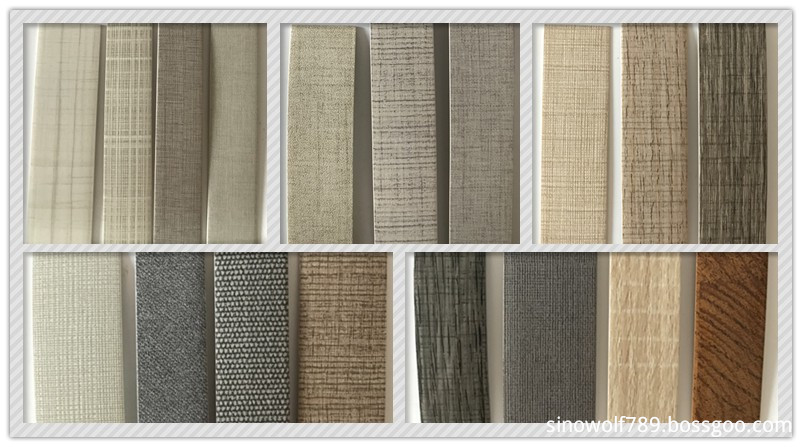
ABS Edge Banding Series Material Composition:
ABS (Acrylonitrile Butadiene Styrene): ABS edge banding is made from a thermoplastic polymer composed of three monomers: acrylonitrile, butadiene, and styrene. It is known for its impact resistance, durability, and flexibility.
PVC (Polyvinyl Chloride): PVC edge banding is made from a synthetic plastic polymer called polyvinyl chloride. PVC is known for its rigidity, chemical resistance, and excellent electrical insulation properties.
Appearance:
ABS Edge Banding: ABS edge banding usually has a more natural appearance, mimicking the look of wood grains and finishes. It can be manufactured with a wide range of colors and patterns, including solid colors, woodgrains, and textures.
PVC Edge Banding Series PVC Edge Banding: PVC edge banding is typically available in a variety of solid colors and woodgrain patterns. It can be produced with a smooth or textured surface, depending on the desired finish.
Application:
ABS Edge Banding: ABS edge banding is suitable for a range of applications, including furniture, cabinetry, countertops, shelving, and other interior applications. Its flexibility allows it to conform to curved or irregular edges easily.
PVC Edge Banding: PVC edge banding is commonly used in the same applications as ABS edge banding, including furniture, cabinetry, and interior fixtures. It provides a more rigid and durable edge finish.
Durability and Resistance:
ABS Edge Banding: ABS edge banding offers good impact resistance and durability, making it resistant to chips, cracks, and wear over time. It is less prone to discoloration and is resistant to heat, moisture, and common household chemicals.
PVC Edge Banding: New Pvc Wood Grain Color Edge Banding is known for its excellent durability, chemical resistance, and moisture resistance. It is less likely to scratch, discolor, or delaminate, making it suitable for high-traffic areas or applications exposed to moisture.
Processing and Installation:
ABS Edge Banding: ABS edge banding can be easily cut, trimmed, and shaped using standard woodworking tools. It can be applied using various methods, including hot melt adhesive, pressure-sensitive adhesive, or edge banding machines.
PVC Edge Banding: PVC edge banding can also be easily cut and shaped using woodworking tools. It is commonly applied using hot melt adhesive, which bonds well to the PVC material.