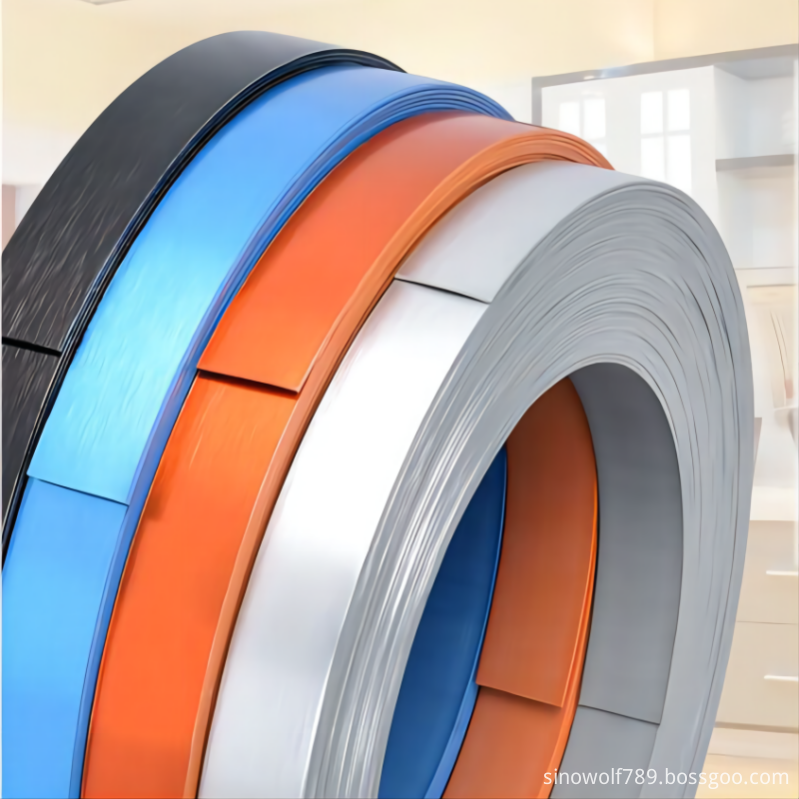
Commonly used materials for edge banding are: copolymer of acrylonitrile, butadiene, styrene three monomers (ABS), polypropylene (PP), polyethylene (PVC) and polymethyl methacrylate (PMMA), etc.
Many people think that with the edge banding, the pvc edge banding makes the furniture more beautiful and the whole looks better. The edge banding is also used to reduce the amount of formaldehyde released in the board. After the edge is sealed around the board, the release of formaldehyde and other substances in the board will be weakened to a lower level.
Now the environmental protection factor of the board is very high, do you still need edge sealing? The answer is yes, yes! For furniture that has been used by the family for a long time, no matter whether the board meets the environmental protection requirements, whether the board is environmentally friendly and does not release harmful substances, edge sealing is very important. The quality of the edge sealing is also an effective basis for testing whether a brand is reliable.
The quality of the edge sealing of the same color edge sealing strip will also affect the regret of the beauty of the edge sealing, and it will also affect the volatilization and release of formaldehyde and other substances after the edge sealing! So try to find big factories and big brands for customization. Most of the small factories use semi-automatic edge banding technology. A sheet with tight edge sealing will make the furniture without gaps in use, and the overall feeling is strong, and the residual formaldehyde and other harmful substances inside the sheet are not easily leaked, which is more environmentally friendly. If the edge sealing effect is poor, unevenness and warping will occur, affecting the service life and aesthetics of the furniture, not environmentally friendly, and endangering human health.
Strictly control the edge sealing technology in the customization of the whole house, so that the furniture looks more beautiful and feels smoother, and it also plays the role of preventing moisture from entering the board substrate and causing deformation.